Patriot Roof Guide
Algae, Moss and Lichen on Shingles
Many Charlotte roofs carry dark streaks, a green fringe along the bottom edge or pale crusty spots. These are three different growths, and they do not mean the same thing for the roof.
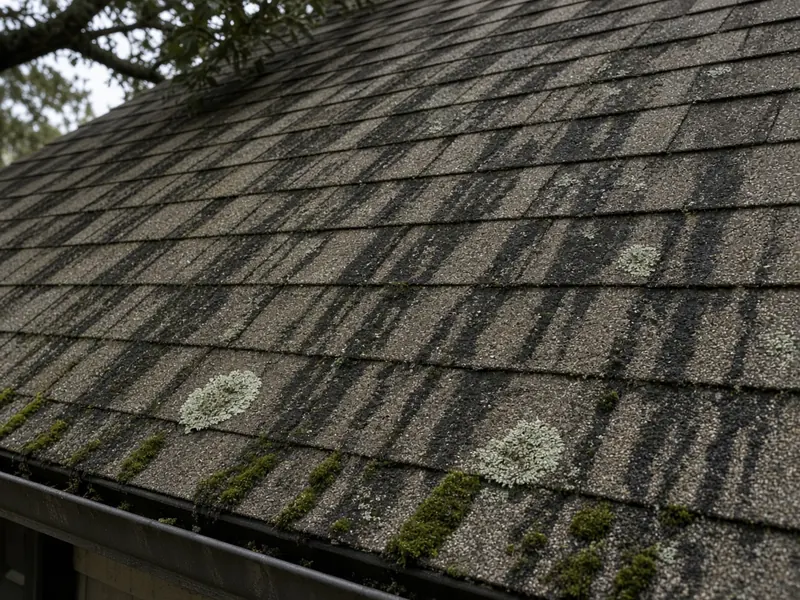
Dark streaks are usually algae
The black or dark brown streaks that run down a shingle slope are usually a blue-green algae that thrives in warm, humid weather, and Charlotte has plenty of that from late spring into fall. The growth follows the path water takes, so it looks like dripped paint. Spores travel on wind and rain, which is why streaks often show up on several houses on the same street. For the most part the streaks change how the roof looks, not how it sheds water. On a light-colored roof they can also dull the surface that reflects summer sun.
Moss has thickness
Moss grows as a green cushion where the roof stays damp: under trees, on north-facing slopes and in valleys where leaves collect. Unlike algae, it holds water against the shingles and can creep under the edges of the tabs and lift them. A few small patches tell you that part of the roof stays wet. A thick mat deserves attention, because a lifted shingle edge lets wind and water get underneath.
Lichen grips the surface
Lichen is a fungus and an alga living together. On shingles it forms flat gray, pale green or orange rosettes. It grows slowly and holds on tightly among the granules, the small mineral chips on the shingle surface that shield the asphalt from the sun. Scraping or pulling lichen off can take those granules with it.
Why one side of the roof and not the other
Sun and moving air decide most of it. A slope that gets afternoon sun dries quickly after a rain or a muggy night. A slope under a willow oak, facing north or shaded by the house next door stays damp for hours and grows far more. Gutters that spill onto the lower edge add water there as well. Growth on only one side usually says more about shade than about the shingles.
Go gently with cleaning
High-pressure washing is a poor match for asphalt shingles. The stream can strip granules and loosen shingle edges, and a roof that has lost granules ages faster in the summer sun. Strong chemical mixes can also harm plants, lawns and painted trim below. If you hire someone to clean the roof, ask what method and pressure they use, how they protect plants and gutters, and what the shingle maker's written care instructions say. The main Patriot site explains how to match the cleaning method to the surface. Never walk on a roof that is wet or mossy; it is slippery even at a gentle pitch.
Slowing it down
Anything that helps a slope dry out helps: trimming branches back from the roof, keeping gutters and valleys clear of leaves and letting light reach the shaded side. Some shingle lines are made with algae-resistant granules, and metal strips near the ridge are sometimes part of a new roof. If you are planning a replacement on a shaded lot, ask which of these the shingle you are considering includes and what each one is meant to do.
Keep a simple record
Take a photo of the same slope from the same spot in the yard each spring. Over a few years the pictures show whether growth is spreading, holding steady or shrinking after a tree was trimmed.